WHY KIDS NEED THE WHOLE BIBLE CHRONOLOGICALLY EVERY YEAR
You want the kids in your ministry to know the Bible not just know about it. But most curriculum teaches the Bible as a collection of disconnected stories, and kids never see how it all fits together. Chronological teaching changes that.
Chronological Bible teaching helps children understand Scripture as one unified story, rather than disconnected stories. When kids learn the Bible in order—from Genesis to Revelation—they see God’s redemptive plan unfold, which deepens both comprehension and retention.
So why does chronological teaching work better than the traditional approach? How does it change what kids remember and how they see God? And what does it look like in your ministry? Here’s why chronological teaching matters, and how it works.
The Problem with Disconnected Bible Stories

Most children’s curriculum teaches the Bible in fragments. A lesson on Noah. A lesson on Moses. A lesson on David. A lesson on Jesus. Each story is taught in isolation, often with a moral lesson attached: Be brave like David. Be obedient like Noah. Be faithful like Moses.
But here’s the problem. When kids learn the Bible as a collection of disconnected stories, they grow up thinking the Bible is a book of moral lessons. They learn to ask, “What should I do?” instead of “What is God doing?”
They also miss the big picture. They don’t see how Noah connects to Abraham. They don’t see how Moses points to Jesus. They don’t see how David’s throne leads to the coming King. The Bible becomes a series of unrelated events instead of one unified story of rescue.
And the data confirms the gap. The State of the Bible 2026 report found that 62% of parents rarely or never read the Bible with their children. And only 14% do it daily or often. The report notes that most American parents are open to the Bible, but “behavior hasn’t kept pace with that openness.”
That’s the gap you’re trying to close. And one reason it exists? Parents don’t see the big picture. They’ve never been taught to read the Bible as one story.
What Chronological Teaching Does
Chronological Bible teaching does something simple but profound. It teaches the Bible in the order it happened. Instead of jumping around—from Noah to Moses to David to Jesus—it walks through the story from beginning to end.

This changes everything.
When kids learn the Bible in order, they see how each story connects to the next. They see how God’s promises build on each other. They see how the Old Testament points forward to Jesus, and how the New Testament fulfills what was promised.
Here’s what chronological teaching does:
| Disconnected Approach | Chronological Approach |
|---|---|
| Teaches stories in isolation | Teaches stories as part of one story |
| Focuses on moral lessons | Focuses on God’s redemptive plan |
| Kids learn, “What should I do?” | Kids learn, “What is God doing?” |
| Old Testament feels disconnected from Jesus | Old Testament points to Jesus |
| Kids memorize facts | Kids understand the story |
When kids see the whole story, they don’t just learn facts. They learn to read Scripture the way it was meant to be read—as one unified narrative of God’s rescue.
And the research backs this up. The 2026 State of the Bible report found that 74% of people who follow a reading guide, plan, or program have read most or all of the Bible. Plans work. Structure matters. A chronological approach helps.
How Chronological Teaching Uses the Biblical Rope

Chronological teaching works best when it’s paired with a framework for understanding the big story. That’s where the Biblical Rope comes in.
The Biblical Rope is a simple framework that helps kids see how every passage connects to the whole Bible. It has three parts:
| Part | What It Is | What It Does |
|---|---|---|
| The Strands | Five themes woven through Scripture (Identity, Kingdom, Presence, Promise, Wisdom) | Shows what God is doing throughout the story |
| The Covenant Knots | Five promises God made (Noahic, Abrahamic, Mosaic, Davidic, New) | Shows how God’s plan unfolds through the story |
| The Milestone Beads | Seven turning points (Creation, Exodus, Wilderness, Kingship, Exile, Gospel, Church) | Shows where each story fits in the timeline |
When kids learn the Bible chronologically and use the Biblical Rope, they don’t just learn what happened. They learn why it happened and how it points to Jesus.
New to the Biblical Rope? Read this first: What Is the Biblical Rope? Five Strands That Hold the Whole Story Together
How the Accordion Calendar Works
One of the biggest challenges in children’s ministry is making sure Christmas and Easter land correctly. Most curriculum solves this by stopping the story. You’re chronologically teaching the Exodus, and suddenly you take a two-week break for Christmas. Then you jump back into Exodus. The story gets fractured. Or you skip lessons entirely and ignore the church calendar.
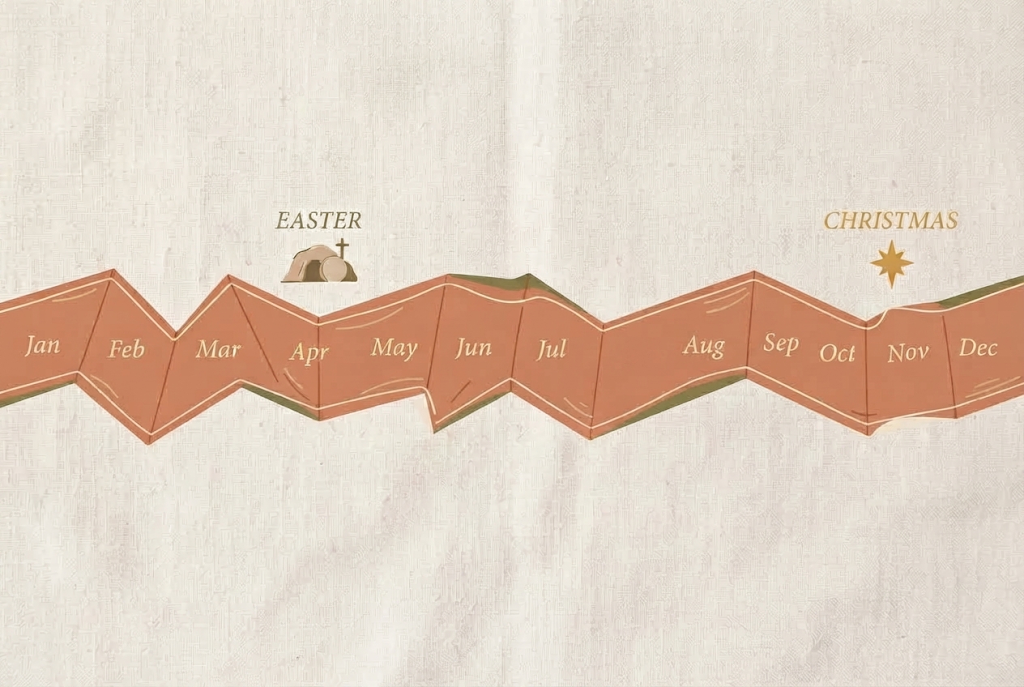
The Accordion Calendar solves this differently. It’s designed to fit your church year—not the other way around. It expands and contracts so that Jesus’ birth always lands at Christmas and His death and resurrection always land at Easter—all while remaining 100% chronological.
Here’s how it works:
| Element | What It Does |
|---|---|
| Unit 1 (Christmas to Easter) | Contains expansion weeks (extra stories) to add so you don’t miss the chronological flow and always hit Jesus’ death and resurrection at Easter |
| Units 3 & 4 | Contain combined lessons. For every expansion lesson you use, you use one combined lesson in Units 3 or 4 |
| 46 Core Lessons | Cover the story arc |
| 6 Sabbath Breaks | Give you room for special events, rest, or snow days without having to skip lessons |
You don’t have to choose between teaching the Bible in order and celebrating the church calendar. You get both.
The 3 Year Journey: The Whole Bible Every Year
The Bible Wonderlife curriculum is built on a 3-year plan…but not the way you might expect. It doesn’t take three years to get through the Bible once. It goes through the entire Bible every year.
Each year has a different focus:
| Year | Theme | New Testament Focus | Old Testament Focus |
|---|---|---|---|
| Year 1 | God’s Faithfulness | Jesus’ Miracles, Paul’s 1st Journey | Creation to Conquest, Conquest to Exile |
| Year 2 | God’s Justice & Mercy | Jesus’ Teachings, Paul’s 2nd Journey | Creation to Promised Land, Kings to Restoration |
| Year 3 | God’s Redemptive Plan | Following Jesus, Paul’s 3rd Journey | Creation to Judges, Kings & Prophets |
Kids don’t wait three years to encounter Jesus. They meet Him every single year through a different lens. And over three years, they build a complete picture of Scripture: the whole story, from Genesis to Revelation, three times over.
Each year has 46 core lessons, with 6 built-in Sabbath breaks. That’s 138 lessons over three years.
Want to see the full plan? Download the Scope & Sequence with the free trial.
Why Kids Learn Better with Chronological Teaching
Chronological teaching works because it respects how kids actually learn. Here’s why:
| What It Does | Why It Matters |
|---|---|
| Builds on prior knowledge | Each lesson builds on what came before, so kids remember more |
| Creates a mental map | Kids develop a framework for understanding the whole Bible |
| Shows cause and effect | Kids see how one event leads to another—and how God is at work through it all |
| Points to Jesus consistently | Every story connects to the coming King, so kids see Jesus on every page |
| Forms spiritual identity | Kids don’t just learn facts. They learn they’re part of God’s story |
This is why the State of the Bible report says that 74% of people who follow a reading plan have read most or all of the Bible. Plans work. Structure matters. Chronological teaching gives kids a plan for understanding Scripture.
What about the 5E Lesson structure?
Chronological teaching gives kids the big picture. The 5E lesson structure helps them engage with each lesson.
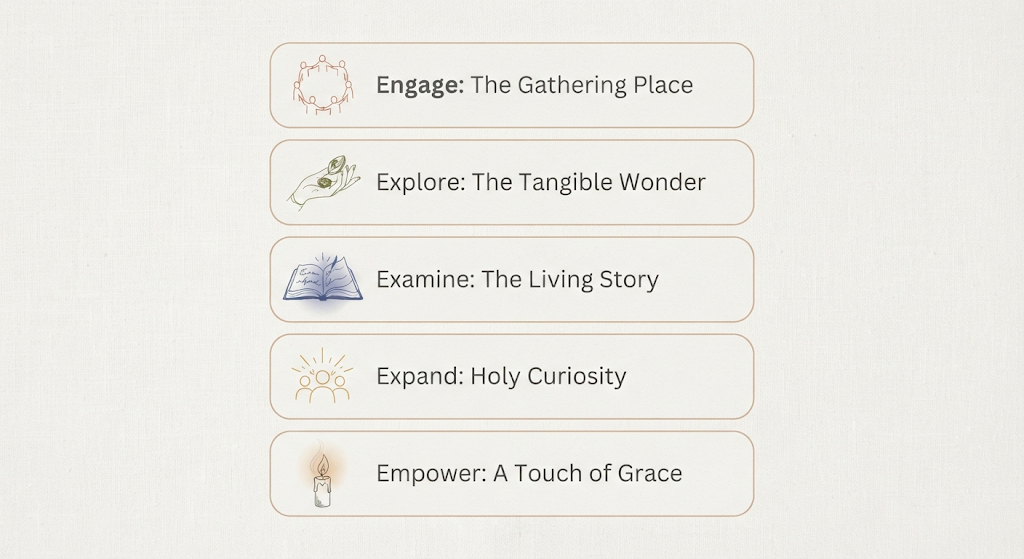
The 5E structure is a five-step teaching framework. Each step has a specific purpose:
| Step | Name | What It Does |
|---|---|---|
| Engage | The Gathering Place | Every child is seen, known, and welcome. Includes an ice breaker activity and relational question to build community. |
| Explore | The Tangible Wonder | Every child experiences a fruit of the Spirit through a hands-on activity. A challenge rule helps them feel the need for the fruit and introduces the story’s tension. |
| Examine | The Living Story | Every child hears the story and encounters Jesus. The Bible story is told dramatically, a WONDER Bible study skill is taught, the Big Idea is introduced, and everything points to Jesus. |
| Expand | Holy Curiosity | Every child discovers their gift and does life together in small groups. Kids have an opportunity to foster deep relationships, ask questions, practice using spiritual gifts, and the WONDER skill. |
| Empower | A Touch of Grace | Every child is sent out with peace and purpose. Kids practice a spiritual habit and spend a moment with God. |
Every lesson in the Bible Wonderlife curriculum follows the 5E structure. It’s how kids move from hearing information to actually owning their faith—and how spiritual formation happens week by week.
Want to go deeper? Read about the 5E structure.
How to Start Teaching Chronologically
You don’t need a seminary degree to teach the Bible chronologically. You just need a plan.
If you’re a children’s ministry director:
The Bible Wonderlife curriculum gives you everything you need: 46 core lessons per year, the 5E lesson structure, the Biblical Rope framework, and the Accordion Calendar. It’s ready to go.
If you’re a parent or volunteer:
You can still teach chronologically at home. Start with a simple reading plan. Read through the Bible in order with your kids—one story at a time. Ask the three Rope questions: Where does this fit? What covenant is connected? Which strand is shining? You don’t need to be an expert. You just need to walk through the story together.
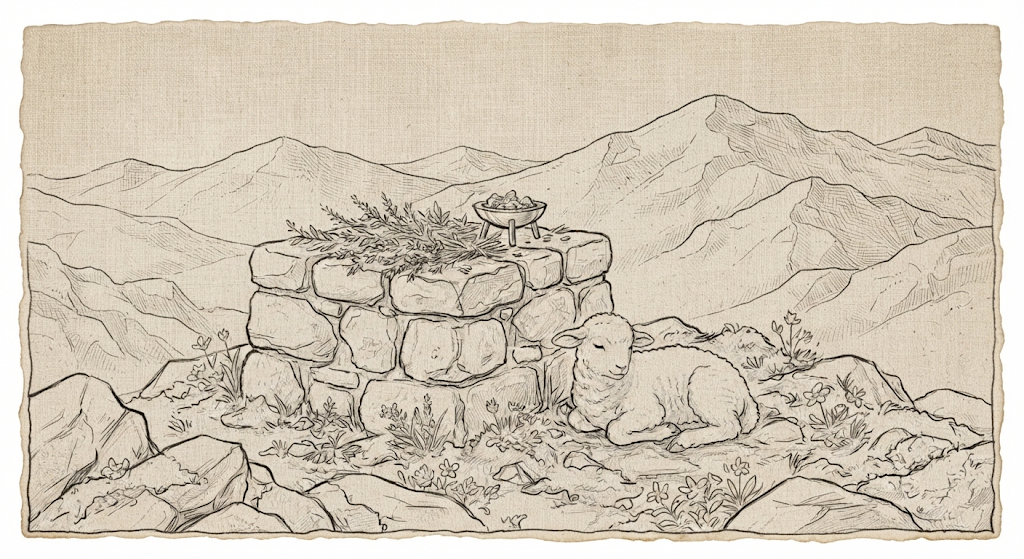
Imagine this. You’re teaching the story of Abraham and Isaac. It’s a hard story. God asks Abraham to sacrifice his son.
If you teach it in isolation, kids walk away with a moral lesson: Trust God even when it’s hard. That’s true, but it’s incomplete.
Now imagine teaching it chronologically, with the Biblical Rope. You’ve already taught Genesis 1–11. Kids know about Creation, the Fall, and God’s promise to Abraham. They know the Abrahamic covenant, that God promised to bless all nations through Abraham’s family.
Now you get to Genesis 22. You read the story. You ask, “Where does this fit?” It’s in the Patriarchs section of the story. You ask, “What covenant is connected?” The Abrahamic covenant. You ask, “Which strand is shining?” Promise. God is testing Abraham, and Abraham trusts that God will provide.
Then you ask the most important question: “How does this point to Jesus?” Abraham’s son was spared. But God’s Son was not. On the cross, God provided the sacrifice that Abraham couldn’t. The story isn’t just about Abraham’s faith. It’s about God’s provision.
That’s chronological teaching with the Biblical Rope. Same story. New eyes. The whole Bible comes alive.
Chronological teaching changes everything. It helps kids see the Bible as one unified story and themselves as part of it.
The Bible Wonderlife curriculum is built on a 3-year chronological plan that covers the whole Bible every year. Every lesson is designed to help kids see how the whole Bible points to Jesus.
Want to see it in action? Download the free 9-lesson trial. You’ll get 9 complete lessons, the Director’s Guide, and the full Scope & Sequence. See for yourself how chronological teaching works.
Keep Reading:
- What Is the WONDER Method? A Simple Way to Study the Bible — the six-step method that pairs with the Rope
- What Is the Biblical Rope? Five Strands That Hold the Whole Story Together — the framework that helps kids see the big picture
- The 5E Lesson Structure for Kids — the teaching framework behind every lesson

Come. Wonder.
Live…In Jesus.
Resources to help you encounter the wonder of who God is through the Bible.