THE 5e LESSON STRUCTURE:
HOW TO TEACH THE BIBLE SO KIDS ACTUALLY REMEMBER IT
You’ve prepared the lesson. You’ve prayed. You’ve got the craft and the snack. But by the time kids get to the car, they’ve forgotten everything. Most Bible lessons inform kids; they don’t form them. The 5E lesson structure changes that.
The 5E lesson structure is a five-step teaching framework—Engage, Explore, Examine, Expand, Empower—that helps children move from hearing information to owning their faith. Each step builds on the last, moving kids from curiosity to community to application.
So what does each step actually look like? How does the 5E structure connect to the Fruit of the Spirit, spiritual gifts, and spiritual habits? And what changes when you use it in your ministry? Here’s how the 5E structure works, and why it matters.
Why Kids forget Most Bible Lessons
Most children’s curriculum follows the same pattern. Open with a prayer. Tell the Bible story. Ask a few questions. Do a craft. Send them home.
It’s not a bad pattern. But it has a problem. Kids hear the story, but they don’t engage with it. They learn facts, but they don’t form habits. They walk out the door and forget everything by lunch.
The State of the Bible 2026 report found that 62% of parents rarely or never read the Bible with their children. And only 14% do it daily or often. The report notes that most American parents are open to the Bible, but “behavior hasn’t kept pace with that openness.”
That’s the gap. Kids learn about God at church, but they don’t learn to walk with Him. Information doesn’t become formation.
The 5E structure is designed to close that gap. It’s a five-step framework that moves kids from hearing to owning. It’s not just about what they know. It’s about who they’re becoming.
What the 5E Structure Actually is
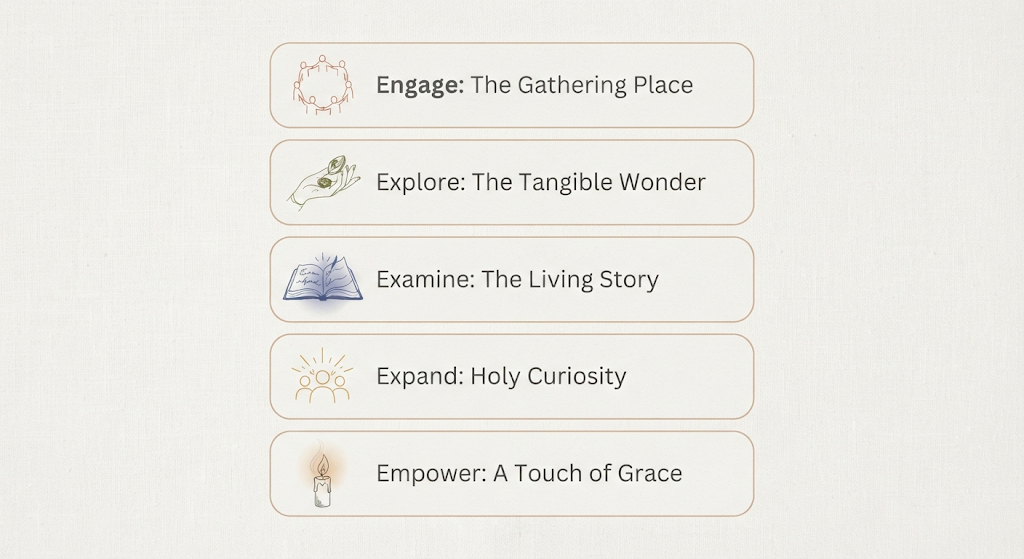
The 5E structure is a five-step teaching framework. Every lesson in the Bible Wonderlife curriculum follows it.
Each step has a purpose. Each step builds on the last.
| Step | Name | What It Does |
|---|---|---|
| Engage | The Gathering Place | Every child is seen, known, and welcome |
| Explore | The Tangible Wonder | Every child experiences a fruit of the Spirit |
| Examine | The Living Story | Every child hears the story and encounters Jesus |
| Expand | Holy Curiosity | Every child discovers their gift in small groups |
| Empower | A Touch of Grace | Every child is sent out with peace and purpose |
The 5E structure isn’t a formula. It’s a rhythm. It’s how kids move from hearing information to actually owning their faith.
How the 5E Structure Aligns with Educational Best Practices
Here’s something you might not know. The 5E instructional model isn’t unique to children’s ministry. It’s a widely used educational framework in schools, especially in science education, and it’s built on decades of research about how kids actually learn.
The 5E model was developed in the late 1980s by the Biological Sciences Curriculum Study (BSCS), building on constructivist learning theory—the idea that learners build knowledge by connecting new experiences to what they already understand, rather than passively absorbing information . It’s used in classrooms across the country because it works.
Here’s how the two models compare:
The names are different, but the rhythm is the same. Kids learn best when they experience first, then understand, then apply. The Bible Wonderlife curriculum takes this proven educational framework and points it toward spiritual formation.
Here’s why this matters for your ministry. When you use the 5E structure, you’re not just teaching Bible stories. You’re using a method that teachers use to help kids actually learn. The difference is that your goal isn’t just knowledge…it’s transformation.
Engage: The Gathering Place
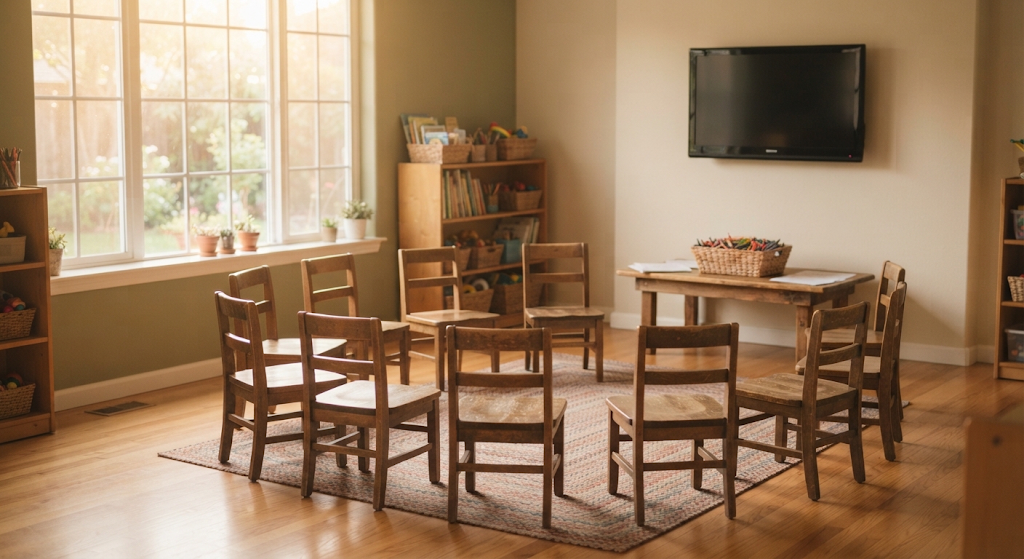
The first step is Engage. This is the gathering place.
Every child is seen, known, and welcome. The lesson opens with an ice breaker activity and a relational question. The goal isn’t to teach yet. The goal is to build community.
Why does this matter? Because kids learn best when they feel safe. Before you can teach them, you need to connect with them. Engage creates the space for that. It says, “You belong here. You’re not just a face in the crowd.”
When kids feel seen, they’re ready to learn. Engage makes that possible.
Explore: The tangible Wonder
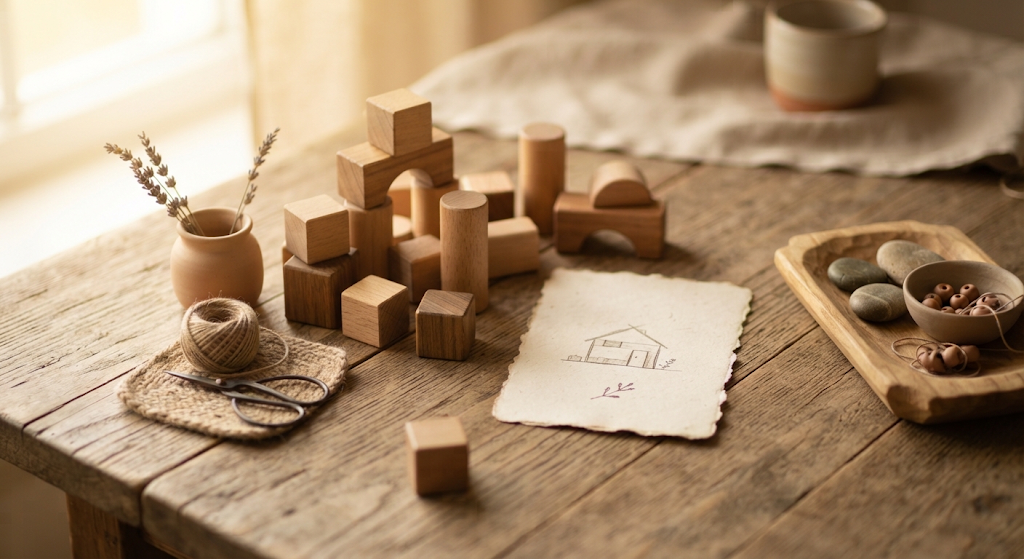
The second step is Explore. This is where wonder begins.
Every child experiences a fruit of the Spirit through a hands-on activity. But there’s a twist. A challenge rule helps them feel the need for the fruit—and introduces the story’s tension.
Here’s what that looks like in practice:
| Fruit of the Spirit | Activity | Challenge Rule |
|---|---|---|
| Patience | Build a tower together | You can’t touch the same block twice |
| Kindness | Draw a picture for someone else | You can only use your non-dominant hand |
| Self-Control | Stack cups into a pyramid | You have to do it in complete silence |
The challenge rule creates tension. Kids feel the need for the fruit before they hear about it. Then the story shows them where that fruit comes from.
“But the fruit of the Spirit is love, joy, peace, patience, kindness, goodness, faithfulness, gentleness, self-control; against such things there is no law.” — Galatians 5:22–23 (NASB95)
Explore isn’t just an activity. It’s a setup. It prepares kids to hear the story with their hearts, not just their heads.
Examine: The Living Story
The third step is Examine. This is the heart of the lesson.
Every child hears the story and encounters Jesus. The Bible story is told dramatically. A WONDER Bible study skill is taught. The Big Idea is introduced. And everything points to Jesus.
Here’s what happens in Examine:
| Element | What It Does |
|---|---|
| The Story | The Bible passage is told dramatically, not read flatly |
| The WONDER Skill | Kids learn one of the 24 WONDER Bible study skills |
| The Big Idea | The main truth of the lesson is named and explained |
| The Jesus Connection | Every story is shown to point to Jesus |
This is where the Biblical Rope comes in. The Big Idea is one of the five Strands—Identity, Kingdom, Presence, Promise, or Wisdom. Every lesson shows kids which strand is shining and how it points to Jesus.
New to the Biblical Rope? Read this first: What Is the Biblical Rope? Five Strands That Hold the Whole Story Together
Examine isn’t just about information. It’s about encounter. Kids don’t just learn about Jesus. They meet Him.
Expand: Holy Curiosity
The fourth step is Expand. This is where kids go deeper.
Every child discovers their gift and does life together in small groups. Kids have an opportunity to foster deep relationships, ask questions, practice using spiritual gifts, and use the WONDER skill they just learned.
Expand is built on a simple belief: discipleship happens in relationship. Kids don’t grow in isolation. They grow in community.
Here’s what happens in Expand:
| Element | What It Does |
|---|---|
| Small Groups | Kids process the lesson together, not alone |
| Spiritual Gifts | Kids discover and practice their gifts |
| WONDER Skill | Kids practice the skill they learned in Examine |
| Questions | Kids ask what they’re actually wondering |
Expand isn’t just discussion. It’s discipleship. It’s where kids learn to follow Jesus together.
Empower: A Touch of Grace

The fifth step is Empower. This is where kids are sent out.
Every child is sent out with peace and purpose. Kids practice a spiritual habit and spend a moment with God.
Empower is the slow-down step. After the story, after the discussion, kids take a moment to be with God. They practice one of the 12 spiritual habits. They sit in silence. They pray. They listen.
Here’s what happens in Empower:
| Element | What It Does |
|---|---|
| Spiritual Habit | Kids practice one habit (prayer, Scripture reading, gratitude, etc.) |
| Moment with God | Kids spend a quiet moment in God’s presence |
| Sending | Kids are sent out with a blessing and a purpose |
Empower isn’t a closing activity. It’s a commissioning. Kids don’t just leave with information. They leave with a habit and a moment with God.
Why the 5E Structure Actually Works
The 5E structure works because it respects how kids actually learn. Here’s why:
| What It Does | Why It Matters |
|---|---|
| Builds community first | Kids learn best when they feel safe and seen |
| Creates tension | Kids pay attention when they feel a need |
| Tells the story | Kids remember stories, not lectures |
| Connects to Jesus | Every lesson points to the gospel, not just a moral |
| Practices spiritual habits | Kids don’t just learn about faith—they practice it |
| Sends kids out | Kids leave with purpose, not just information |
The educational research backs this up. The 5E model is built on constructivist learning theory—the idea that people build knowledge and meaning from experiences, not passive reception . By understanding and reflecting on activities, kids reconcile new knowledge with what they already know.
When you use the 5E structure in your ministry, you’re not just teaching. You’re forming disciples.
How the 5E structure works with Everything Else
The 5E structure doesn’t stand alone. It works with the other frameworks in the Bible Wonderlife curriculum.
| Framework | What It Does | How It Connects |
|---|---|---|
| WONDER Method | Six steps for Bible study | Taught in Examine, practiced in Expand |
| Biblical Rope | Five strands, five knots, seven beads | The Big Idea in Examine comes from the five Strands |
| Chronological Teaching | The Bible in order, whole Bible every year | The story in Examine always fits the timeline |
| 5E Structure | Five steps for every lesson | The framework that holds it all together |
Everything works together. The 5E structure is the weekly rhythm. The WONDER method is the Bible study skill. The Biblical Rope is the big-picture framework. Chronological teaching is the order.
Want to go deeper? Read about chronological teaching.
The 5E structure changes everything. It moves kids from hearing information to owning their faith. It builds community. It creates wonder. It tells the story. It sends kids out with purpose.
Every lesson in the Bible Wonderlife curriculum follows the 5E structure. It’s how spiritual formation happens week by week.
Want to see it in action? Download the free 9-lesson trial. You’ll get 9 complete lessons, the Director’s Guide, and the full Scope & Sequence. See for yourself how the 5E structure works.
Keep Reading:
- What Is the WONDER Method? A Simple Way to Study the Bible — the six-step method taught in every lesson
- What Is the Biblical Rope? Five Strands That Hold the Whole Story Together — the framework behind every Big Idea
- Why Chronological Bible Teaching Changes Everything for Kids — how the story order shapes the curriculum

Come. Wonder.
Live…In Jesus.
Resources to help you encounter the wonder of who God is through the Bible.