

Bible study resources are a great help when it comes to studying the Bible. But if you’ve ever searched for a “good commentary” or tried to figure out the difference between a concordance and a lexicon, you know the search can quickly lead to confusion and overwhelm.
You deserve clarity, not complexity. Whether you are a new believer, a busy Christian, or a lifelong follower of Jesus, the right tools can help you better understand, interpret, and apply Scripture without the headache.
The best resources to use when studying the Bible include three foundational tools: a Study Bible, a Commentary, and a Bible Dictionary. These resources are affordable, easy to use, and give you everything you need to start.
The Promise: We Cut Through the Noise
This is the only guide you need to build your confidence and your bookshelf. We will walk you through every essential tool, explaining exactly:
- What each resource is.
- Why you need it.
- How to use it effectively.
Along the way, we’ll offer expert recommendations, free options, and beginner-friendly advice to help you get the most out of your Bible study routine.
Disclaimer: This post may contain affiliate links that at no additional cost to you, I may earn a small commission. Read full privacy policy here.
The Foundational Rule: Resources are Tools, Not Crutches
Before we dive into the specific tools, we need to establish a non-negotiable rule for using any resource:
The Golden Rule: Do Your Own Observation First!
The entire purpose of Bible study resources is to aid your interpretation and clarify the context you are struggling with. They are not meant to substitute your personal study.

Never open a commentary or ask a resource what the Bible means until you have first asked yourself what the Bible says.
Why This Rule Matters
This simple practice of observation before interpretation ensures you are relying on the Holy Spirit and the text itself, not merely on the opinions of scholars. Build your observation skills with the SOAP Bible study method.
- Resources Are Interpretation Aids: They provide historical background, linguistic details, and cultural context that you cannot access on your own. This helps you understand what the text meant to the original audience.
- Resources Are Not Substitutes: If you jump straight to a commentary, you risk reading someone else’s conclusion instead of doing the hard, rewarding work of discovery yourself.
By following this rule, your study will remain accessible, enjoyable, and most importantly, productive. You will use the right tool at the right time.
The Core Resources: Your 3 Essential Tools
You don’t need a shelf full of books to start. Every beginner needs just three foundational resources. These tools are the most versatile, cost-effective, and provide the highest return on investment for your time.
The Study Bible: The Swiss Army Knife
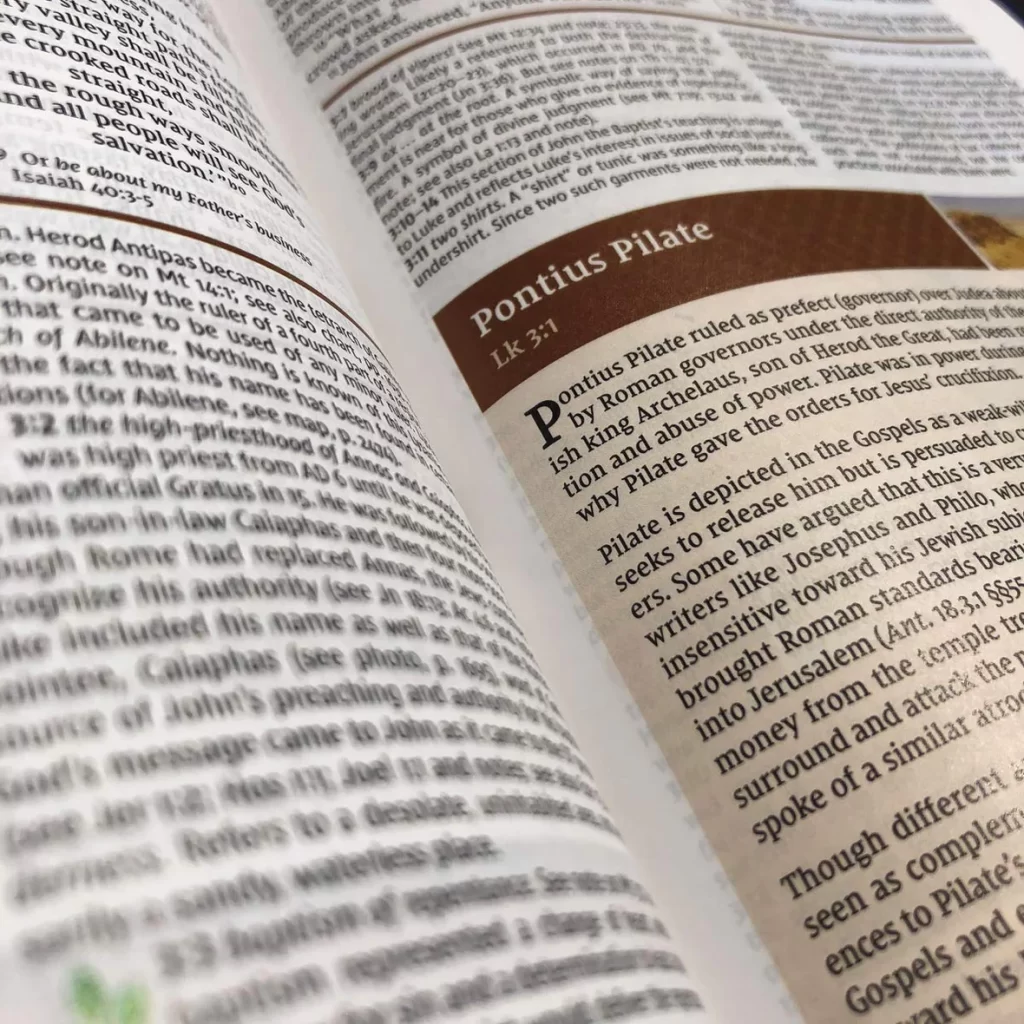
A Study Bible is a Bible that includes extensive added study aids like commentary notes, maps, and book introductions printed directly alongside the Scripture text. You can find a study Bible in your preferred translation. Not sure what that is, learn about the different Bible translations here.
Why You Need It: It is the single most versatile tool you can buy. It’s like having a miniature Bible dictionary, commentary, and atlas all in one binding, making it the perfect first resource for any beginner.
Key Features to Look For:
- Study Notes: Brief commentary on individual passages or verses, often located at the bottom of the page.
- Book Introductions: Overviews discussing the author, audience, message, background, and key themes of each book.
- Maps & Charts: Visual aids to help you understand the geography and historical context.
- Concordance: A list of key words and where they are found in the Bible.
Expert Recommendations
| Study Bibles | Focus & Ideal For |
|---|---|
| NIV Study Bible | The best balance of notes, accessibility, and readability. |
| ESV Study Bible | Highly scholarly notes, excellent for those who want deep theological context. |
| NIV Starting Place Study Bible | Excellent design and simplified notes, ideal for brand-new believers. |
How to Use it Effectively
The best way to use your Study Bible is last. Read the Bible text first, write down your observations, and then look at the study notes to check your interpretation against scholarly consensus. Use the cross-references before the notes.
The Bible Dictionary: The Clarifier
A Bible dictionary contains explanations and definitions of words, concepts, people, places, and ideas found in the Bible. It is not just a definition book; it is a concise encyclopedia of biblical life.
Why You Need It: You need immediate clarity. When you encounter an unfamiliar term (like “Pharisees,” “feasts of Israel,” or “tabernacle”), this resource is the fastest way to understand the background and significance, preventing confusion.
Expert Recommendations:
| Bible Dictionary | Focus & Ideal For |
|---|---|
| Zondervan Illustrated Bible Dictionary | Great visuals and excellent breadth of topics. |
| Holman Illustrated Bible Dictionary | Highly accessible and reliable definitions for beginners. |
How to Use it Effectively
Use your Bible dictionary as soon as you hit a snag. If you read a word, name, or concept (like “Sanhedrin” or “Day of Atonement”) that confuses you, stop reading immediately and look up the entry. This preserves the flow of your study and prevents misunderstanding.
The Commentary: The Content Expert
A Bible commentary provides in-depth notes, explanations, and insights from scholars or pastors on a specific passage or book.
Why You Need It: Once you’ve done your own observation (Section 2), a commentary helps you ensure your interpretation is sound by providing historical and cultural context that may be missing from your Study Bible notes.
Types of Commentaries:
- Exegetical: Highly academic, focused on original languages (best for advanced study).
- Expository/Pastoral: Focused on explaining the text and offering practical application (best for beginners).
- Devotional: Focused on personal reflection and spiritual growth.
Want to dive deeper into these different types of commentaries, then check out this post that explores these commentary types and more.
Expert Recommendations:
| Commentary Type | Recommended Title |
|---|---|
| Single Volume | The New Matthew Henry Commentary (Classic work, updated language) |
| Application Focused | NIV Application Commentary (Excellent balance of context and life application) |
| Expository/Pastoral | Tony Evans Bible Commentary |
How to Use it Effectively
Use commentaries only after you have completed your observation and interpretation. They should confirm your findings or introduce historical context you missed. Always check at least two commentaries to ensure a balanced view, and never rely on one source.
Secondary & Specialized Tools
Once you have mastered the three core resources, you may want to expand your library for deeper study or specialized research. These tools address specific questions related to language, geography, and thematic connections.
We recommend using these secondary resources only when your Study Bible and Dictionary cannot provide the necessary answers.
Specialized Research Tools
These tools are crucial for detailed observation and interpretation, especially when you are doing a Word Study or a Thematic Study.
| Resource | What is It? | Why and How to Use It |
|---|---|---|
| Concordance | An alphabetical list of every word found in the Bible, along with the verses where they appear. | Word Tracking: Use it to find every instance of a specific word (e.g., “grace”) across the entire Bible to establish its full meaning and context. Curious? Learn exactly how to use a concordance here. |
| Lexicon | A dictionary for the original biblical languages (Hebrew and Greek). It defines the original meaning of the word from its source language. | Depth: Use it when a common English word holds a deeper, confusing meaning (e.g., studying the original meaning of agape love). |
| Bible Handbook | A concise reference guide that provides a brief overview, author, audience, and key themes for every book in the Bible. | Big Picture: Use it to get the “lay of the land” before starting a study on an entire book (similar to a Study Bible introduction, but more in-depth). |
Supporting Context Tools
These tools help visualize and contextualize the setting of Scripture, moving it from black-and-white text to a living, breathing historical account.
| Resource | What is It? | Why and How to Use It |
|---|---|---|
| Bible Atlas | A book containing high-quality maps, illustrations, and geographical background of the biblical world. | Geography: Use it to track the journeys of people (like Paul or Abraham) or understand how geography influenced the events of a battle or prophecy. |
| Devotionals | Short, daily readings with personal reflections, prayers, or applications based on a verse or passage. | Application: Use them for quick encouragement and prayerful reflection, but never use them as a substitute for your primary Bible study time. |
Ready to Explore Secondary & Specialized Tools?
If you are serious about taking your study to the next level, incorporating these specialized tools will unlock deeper context and meaning.
The Digital Option: Logos Bible Software
Building a comprehensive physical library can be expensive and take up a lot of space. Fortunately, the rise of technology offers an incredibly powerful and cost-effective alternative.
The Power of Digital: Why Consider Logos?
Logos Bible Software is the industry standard for digital Bible study. It consolidates thousands of resources—Study Bibles, dictionaries, atlases, and commentaries—into a single, searchable platform.
Why You Need It (The Beginner Benefits):
- Portability: Access your entire library on your phone, tablet, or laptop, allowing you to study anywhere.
- Searchability: Look up a topic, word, or concept, and Logos instantly scans your entire library, saving you hours of flipping pages.
- Cost-Effective Over Time: While there is an initial investment, the bundled packages offer a massive library that would cost thousands of dollars to purchase individually.
Our Recommendation for Beginners
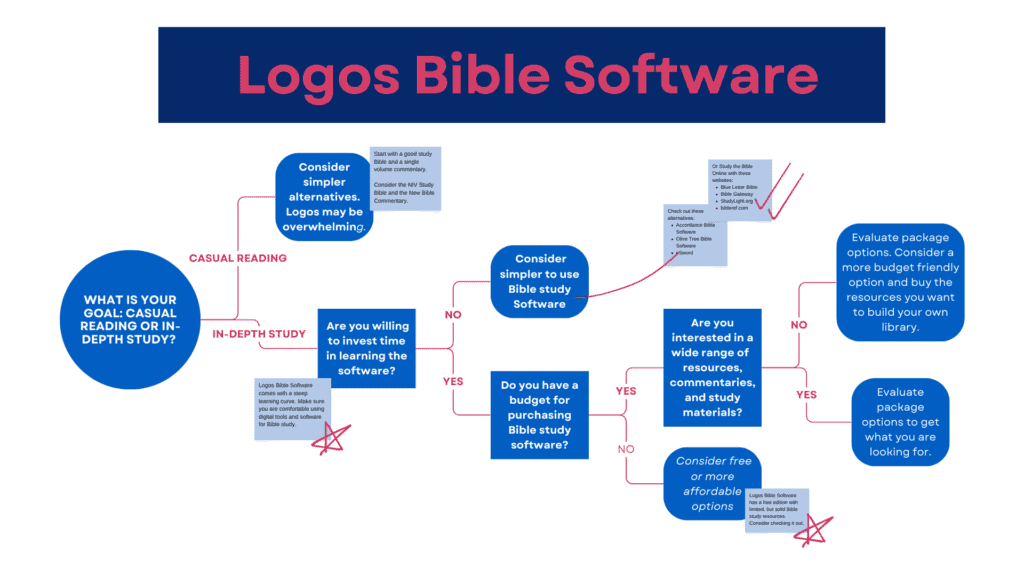
Logos has simplified its structure to offer immediate, full access. For beginners, we highly recommend the Premium Subscription.
This package provides a perfect, robust digital base library. It includes Bibles, foundational reference books, essential commentaries, and powerful search tools designed to accelerate learning without the complexity of advanced scholarly features. It gives you immediate access to everything you need to implement the SOAP, Inductive, or Lectio Divina methods immediately.
If you are ready to deepen your understanding of the Bible and embark on a fulfilling study adventure with the most powerful tools available, the Premium Subscription is your solution.
Unlock Your Digital Library Today:
We have secured a special discount for our readers!
Budget and Practical Tips
You now know what every resource does and how to use it. The final step is building your library and your habit.
Building Your Library on a Budget
Building a good Bible study toolkit doesn’t have to be expensive, but it requires strategy. Here are three effective budget tiers, prioritizing the most essential tools first.
| Budget Tier | Essential Recommendation | Next Tool to Add |
|---|---|---|
| $50 Budget | ESV Study Bible OR Logos Premium Subscription | A dedicated notebook and pen. |
| $100 Budget | NIV Study Bible & New Matthew Henry Commentary | Upgrade to a good Bible Dictionary. |
| $200 Budget | NIV Study Bible, New Matthew Henry Commentary, Holman Bible Dictionary, & Holman Bible Atlas | Consider online software. |
Practical Implementation & Tips
The best resources won’t help if they sit on a shelf. Here are a few final tips to ensure your study routine is effective:
| Challenge | Solution |
|---|---|
| Complexity | Start with a simple translation (NIV or NLT) and focus on just your Study Bible notes. Don’t worry about concordances or lexicons yet! |
| Cost | Use your digital tools. The price of a Logos Premium Subscription gives you instant access to an entire library, which is the most cost-effective method long-term. |
| Overwhelm | Remember the Golden Rule: Do your own observation first. Use your simple, beginner friendly Bible study method. Use your resources to answer specific questions, not to replace your personal time with God. |
Next Steps: Building Your Habit & Your Toolkit
You have the knowledge, the plan, and the budget. Now it’s time to take action.
Step 1: Secure Your Expert-Vetted Toolkit
You’ve learned what every tool does. Stop wasting time and money on resources that don’t deliver. We have personally vetted every recommended item and organized them by category in our affiliate hub.
Your clarity and confidence start with having the right tools on hand.
Step 2: Master Your Routine
The best toolkit won’t help if you can’t be consistent. Before you buy a single item, make sure you know how to build a routine that lasts.
Download the FREE Build a Bible Study Routine Guide!
This guide will help you:
- Build a lasting, flexible routine that fits your life.
- Choose the right method for your lifestyle.
Building a Bible Study Routine Guide
Want to build a Bible study habit? Sign up for our monthly newsletter and we will send you our free Building a Bible Study Routine Guide. You’ll discover your ideal Bible study method and create a customized schedule. Plus, much more.
Here is what you can expect as a Bible Wonderlife subscriber:
-Welcome email with your Free Guide right now!
-Monthly emails with a brief devotional.
-Practical tips and helpful information for growing in your faith.

Our Promise
The time, effort, and investment you put into mastering the Bible will yield the greatest spiritual returns of your life. You have the knowledge and the map—go and encounter God in His Word today!