
You open your Bible wanting peace and connection, but instead, you pull out highlighters, reference books, and feel pressured to dissect every clause. While the SOAP and Inductive methods are vital for what the Bible means, they can often leave your soul dry if you neglect the simple act of listening.
You need a way to slow down. You need a method that focuses on intimacy and rest, not just information and analysis.
The answer is the Lectio Divina (Latin for “Divine Reading”) method. This ancient, meditative approach is designed to shift your focus from studying a book to encountering the Author. It doesn’t replace analytical study; it rejuvenates your spirit, turning your Bible time into a prayerful, personal conversation.
This comprehensive guide will teach you the four steps of Lectio Divina, allowing you to:
- Find deep rest in the presence of God.
- Hear God’s voice clearly by slowing down your reading.
- Transform Scripture into a powerful, personal prayer.
Let’s begin the journey to a more restful and intimate relationship with God’s Word.
Common Questions About Lectio Divina
Historical Context: The Four Steps
The Lectio Divina method is not new; it is a time-tested spiritual discipline that spans centuries. Understanding its origin helps ground the practice in Christian tradition.
From the Monastery to the Modern Quiet Time
The practice of meditative, prayerful reading of Scripture originated within early Christian monasticism.
- St. Benedict (6th Century AD): Benedict, a foundational figure in Western monasticism, mentioned the practice of Lectio Divina for use in his monastic communities. It was a key component of the daily rhythm of life, emphasizing that the Word of God was spiritual food meant to be savored, not just consumed.
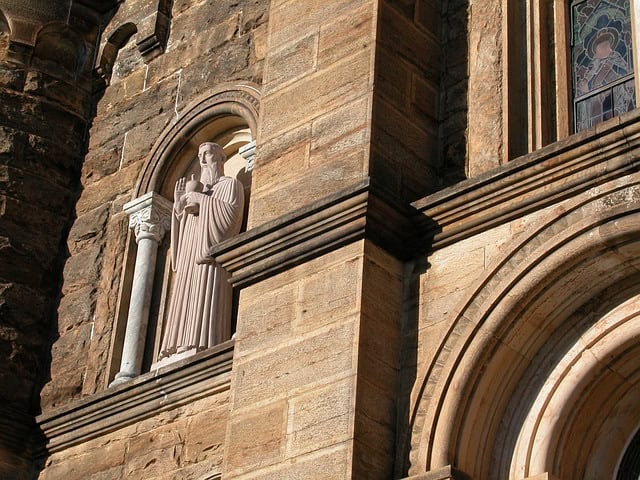
- Guigo II (12th Century AD): The method was formalized by Guigo II, a Carthusian prior, in his short Latin treatise, The Ladder of Monks. Guigo described the process as a spiritual ladder with four rungs, which became the four steps we use today. This was his answer to how to move from mere reading to true spiritual experience.
More recently, Lectio Divina has seen a massive revival outside of monasteries, championed by various Christian traditions seeking a deeper, less analytical engagement with the Bible. Lectio Divina is even among the rise in protestant denominations.
The Four Simple Steps of Lectio Divina
Lectio Divina translates to “Divine Reading” and describes a movement of spiritual encounter.
| Latin Name | English Meaning | Spiritual Action |
|---|---|---|
| Lectio | Read | Attentive reading of the text. |
| Meditatio | Meditate | Pondering and repeating a single word or phrase. |
| Oratio | Prayer | Responsive prayer (talking to God about what you heard). |
| Contemplatio | Rest | Resting in God’s presence and peace. |
Step-by-Step Walkthrough: Lectio (Read)
The first phase of Lectio Divina is simply Lectio, which means to read. This reading is not rushed or analytical; it is an act of attentive listening. You are preparing your heart to hear a specific word from God..
Preparation: Setting the Scene for Listening
Before you even look at the verse, you must prepare your heart.
- Ask for Guidance: Begin with a simple prayer asking God to speak to you through this passage. The goal is to move from studying to listening.
- Find Your Space: Ideally, find some time alone where you won’t be interrupted. Sit comfortably.
- Settle Your Spirit: Use deep, slow breathing to physically and mentally settle yourself.
How to Practice Lectio
- Choose a Short Passage: Select a short passage of Scripture you want to meditate on (a favorite Psalm, a short paragraph from an Epistle, or a few verses from a Gospel account). I would even recommend using an easier-to-read translation such as the New Living Translation (NLT).
- Read Slowly—Multiple Times: This is the most crucial part of Lectio. Read the passage three to four times, focusing only on the words.
- First Read: Read the passage slowly to understand the general context.
- Subsequent Reads: Slow down even more. Let your eyes linger on the individual words.
Helpful Tip: Reading the passage out loud—even in a gentle whisper—can often help you focus and absorb the words more deeply, preventing your mind from wandering.
The Key Rule: Avoid Analysis
The primary goal of Lectio is not to study the historical context or Greek meaning. Your goal is simply to let the words settle.
- Avoid: Looking up commentaries, cross-referencing, or asking deep interpretive questions (save those for a SOAP or Inductive study).
- Seek: The single word or phrase that seems to “jump off the page” or resonate deeply in your spirit.
Step-by-Step Walkthrough: Meditatio (Meditate)
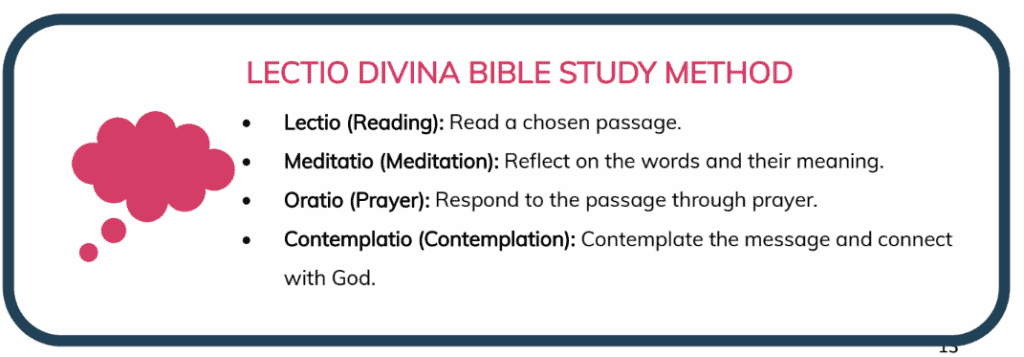
The second step is Meditatio, which means to meditate or ponder. This is where you move from simple reading to deep, reflective engagement with the specific word or phrase that stood out to you during the Lectio phase.
As you continually repeat and ponder the text, you are allowing the words and concepts to sink from your mind into your heart.
Biblical Act of Meditation
Biblical meditation is the act of rumination—thoughtfully turning the text over and over in your mind. You are not trying to empty your mind; you are filling it with the Scripture and focusing intently on the truth God has highlighted for you. To learn more about the difference between Biblical meditation and other meditation practices check out this post.
Ways to Deepen Your Meditation
Use these practical methods to help you focus on the truth God has spoken through the text:
- Memorize: Write the specific phrase or verse that stood out on an index card and work on memorizing it. This gives you the opportunity to ponder that verse over and over, making it a form of meditation that lasts beyond your quiet time.
- Repeat Reading: Similar to the final stage of Lectio, read the passage over and over. Dedicate a set amount of time (e.g., ten minutes) to slow, focused reading.
- Listen: Try listening to an audio version of the passage you are reading. Hearing the words can sometimes unlock new insights.
- Imagine: Take this opportunity to become part of the story. Imagine what it would be like if you were there, listening to these words for the first time or living these events.
- Pray the Psalms: Use the Psalms as a model for contemplative prayer. Read the first verse, then pray whatever comes to your mind after reading that verse, and continue verse by verse until you are done with the Psalm.
- Bible Journaling: Bible journaling is a creative way to reflect on Scripture. It can help you better understand a biblical passage and increase your expectation of encountering God.
Write Down Thoughts That Come to Mind
As you meditate, thoughts and insights will naturally arise. This is the Holy Spirit at work. Be prepared to capture them!
- Write down the words or phrases that stand out.
- Ask yourself: What might God be showing me through this?
- Let your mind linger. Don’t rush the process.
Step-by-Step Walkthrough: Oratio (Pray)
The third step in the Lectio Divina step-by-step walk through is Oratio, which means to speak or pray. This is the step where your meditation turns into a responsive conversation with God through various types of prayer like adoration, confession, or thankfulness.
You are moving from listening to what God has said to you (Meditatio) to responding to Him directly (Oratio).
Begin a conversation with God as you reread the passage one more time. Talk to Him about the specific insights, emotions, or convictions that arose during your meditation.
- Talk and Listen: Remember this prayer is a conversation. Take time to speak your heart, but also take time to be quiet and listen for confirmation or further direction.
- Pray the Passage Back: This is a powerful technique in Oratio. Take the passage a verse or phrase at a time, and use the language of the Scripture in your own prayer. For instance, if the text mentions joy, pray for more joy or thank God for the joy you already possess.
- Respond to Conviction: Your prayer should be a direct response to the Word you just heard.
- Praise: Offer praise if the word revealed something amazing about God’s character.
- Confession: Seek forgiveness or confess a failure if the word highlighted a sin or disobedience.
- Request: Ask for the strength or wisdom to follow through on the action the word requires.

After hearing God speak to you through the text, you should be left with a single desire, conviction, or commitment. Your Oratio should formalize this response.
Step-by-Step Walkthrough: Contemplatio (Rest)
The final step of the Lectio Divina Bible Study method is Contemplatio, which means to contemplate or rest. This phase is the essence of intimacy and is best summed up in the Scripture: “He says, ‘Be still and know that I am God…’” (Psalm 46:10).
The Act of Abiding
After hearing God speak to you (Lectio), reflecting on His word (Meditatio), and responding in prayer (Oratio), you now surrender the entire experience to Him.
Instead of rushing to close your quiet time, you abide—you remain—in the spiritual space of God’s presence and peace.
- Be Still and Receive: This is not a time to think, analyze, or plan. It is simply a time to be still and allow the truth you just received to settle deep within your spirit.
- Rest in Peace: You are resting in the peace and comfort of God’s presence and His ability to handle the concerns and commitments you shared with Him.
- Receive Transformation: This quiet time expresses a willingness to be transformed by God’s word. It is the moment the external truth becomes an internal reality.
Making Contemplatio Personal
This phase is intensely personal and difficult to define, but it is deeply relational.
- Enjoy the Moment: Don’t impose a time limit. Take the time you need to simply enjoy spending this intimate moment with God.
- Sit in Awe: Reflect on the sheer wonder of who God is and the truth you just learned from Him.
- Look Forward: Begin to dream of what this strengthened relationship means for your future life. How will the love and knowledge gained from this study change how you interact with your family, your work, and your community?
This time is where you learn to live a truly transformed, biblical life. Enjoy the rest, and look for ways you can remind yourself of God’s presence and this feeling throughout your entire day.
Interactive Example: Galatians 5:1-12
This section provides a clear, visual summary of how the four steps of Lectio Divina flow together using key phrases from Galatians 5:1-12. The goal here is to cement the process by seeing it in action.
Conclusion & Next Steps
The Transformative Power of Divine Reading
You have now mastered the four simple yet profound steps of the Lectio Divina method. This practice is more than just a technique; it is an invitation to transform your quiet time from an academic exercise into an intimate, prayerful conversation with the living God.
The Lectio Divina method offers an antidote to the spiritual hurry of modern life, leading you into the spiritual rest promised by Christ.
| Method | Focus | Goal |
|---|---|---|
| Analytical (Inductive & SOAP) | What the Bible means and how to apply it. | Information, Interpretation, and Application. |
| Meditative (Lectio Divina) | How God is speaking to me through the Bible. | Intimacy, Transformation, and Encounter. |
By prioritizing listening, surrender, and rest, you express a willingness to be continuously shaped by the Holy Spirit through the reading of Scripture.
Final Challenge: Make Time for Rest
Don’t wait until you’re burned out or overwhelmed to use Lectio Divina. Start by incorporating this method for one short quiet time each week. Choose one of the phrases from the interactive guide above and spend your time lingering in the stillness of Contemplatio.
Your Next Steps to Deeper Study
We are committed to helping you build a rich, consistent quiet time habit. To help you integrate this new, meditative approach into your routine, we have two resources for you:
- Download Your Study Habit Guide: Mastering this method takes practice. Our Building a a Bible Study Habit Guide includes scheduling tips, motivation strategies, and a printable Lectio Divina worksheet to help you formalize your quiet time. Download Your Free Building a Bible Study Habit Guide Now.
Building a Bible Study Routine Guide
Want to build a Bible study habit? Sign up for our monthly newsletter and we will send you our free Building a Bible Study Routine Guide. You’ll discover your ideal Bible study method and create a customized schedule. Plus, much more.
Here is what you can expect as a Bible Wonderlife subscriber:
-Welcome email with your Free Guide right now!
-Monthly emails with a brief devotional.
-Practical tips and helpful information for growing in your faith.

Building a Bible Study Routine Guide
Want to build a Bible study habit? Sign up for our monthly newsletter and we will send you our free Building a Bible Study Routine Guide. You’ll discover your ideal Bible study method and create a customized schedule. Plus, much more.
Here is what you can expect as a Bible Wonderlife subscriber:
-Welcome email with your Free Guide right now!
-Monthly emails with a brief devotional.
-Practical tips and helpful information for growing in your faith.