
I grew up in church, but when I tried to study the Bible on my own, I felt completely lost. I’d pray, open to a random page, read a few verses, and close the book, feeling like I’d accomplished nothing. If you’ve been there, you’re not alone.
Starting out studying the Bible by yourself can feel intimidating. But God wants you to spend time with Him! Learning to study the Bible as an individual is one of the most powerful ways to deepen your relationship with Him.
Through trial and error, I’ve discovered a way to study the Bible that works, and I’ve gathered the practical tips that make the process easier and more meaningful.
Disclaimer: Bible Wonderlife is a participant in the Amazon Services LLC Associates Program and various other affiliate advertising programs. This means we may earn a small commission on qualifying purchases made through the links on this page, at no extra cost to you. We only recommend resources that we have personally tested and are theologically sound. Read the full privacy policy here.
What Individual Study Entails
Individual Bible study simply means taking responsibility for your own spiritual growth by following a process. As a general rule, studying the Bible alone involves four sequential actions:
- Reading: Understanding what the text says.
- Analyzing: Discovering what the text meant to the original audience.
- Interpreting: Determining what the text means across time.
- Applying: Translating the truth into personal life action.
This comprehensive guide will walk you through setting up your time, executing this four-step process, and choosing a specific method that works for your unique personality.
Phase 1: Preparation
Before you open your Bible, setting up your environment and mindset is crucial for consistency. Your goal in this phase is to eliminate distractions and invite the Holy Spirit to lead your study.
Establish Your Routine & Space
The enemy of consistency is chaos. By establishing a routine, you make study time feel natural, not forced.
- Choose a Comfortable Space: Choose a place where you can be alone and uninterrupted. This may be a comfy chair, a back porch, or a corner in your room. Your spot should encourage focus on God and His Word.
- Set a Regular Study Time: You don’t need a rigid clock time (e.g., 7:30 to 8:00 AM), but aim for a common routine. For example: Get up, take a shower, read the Bible, then eat breakfast. Consistency is key, as it can take anywhere from 18 to 254 days to form a habit!
Gather Your Tools
Individual study requires only a few basic materials—don’t let tool selection become a distraction!
- Select the Right Bible Translation: There are many different Bible translations. Choose one that is easy for you to read and understand. I’d recommend starting with a thought-for-thought translation like the New International Version (NIV). Want to choose your own? Learn how to choose the right Bible translation for your study.
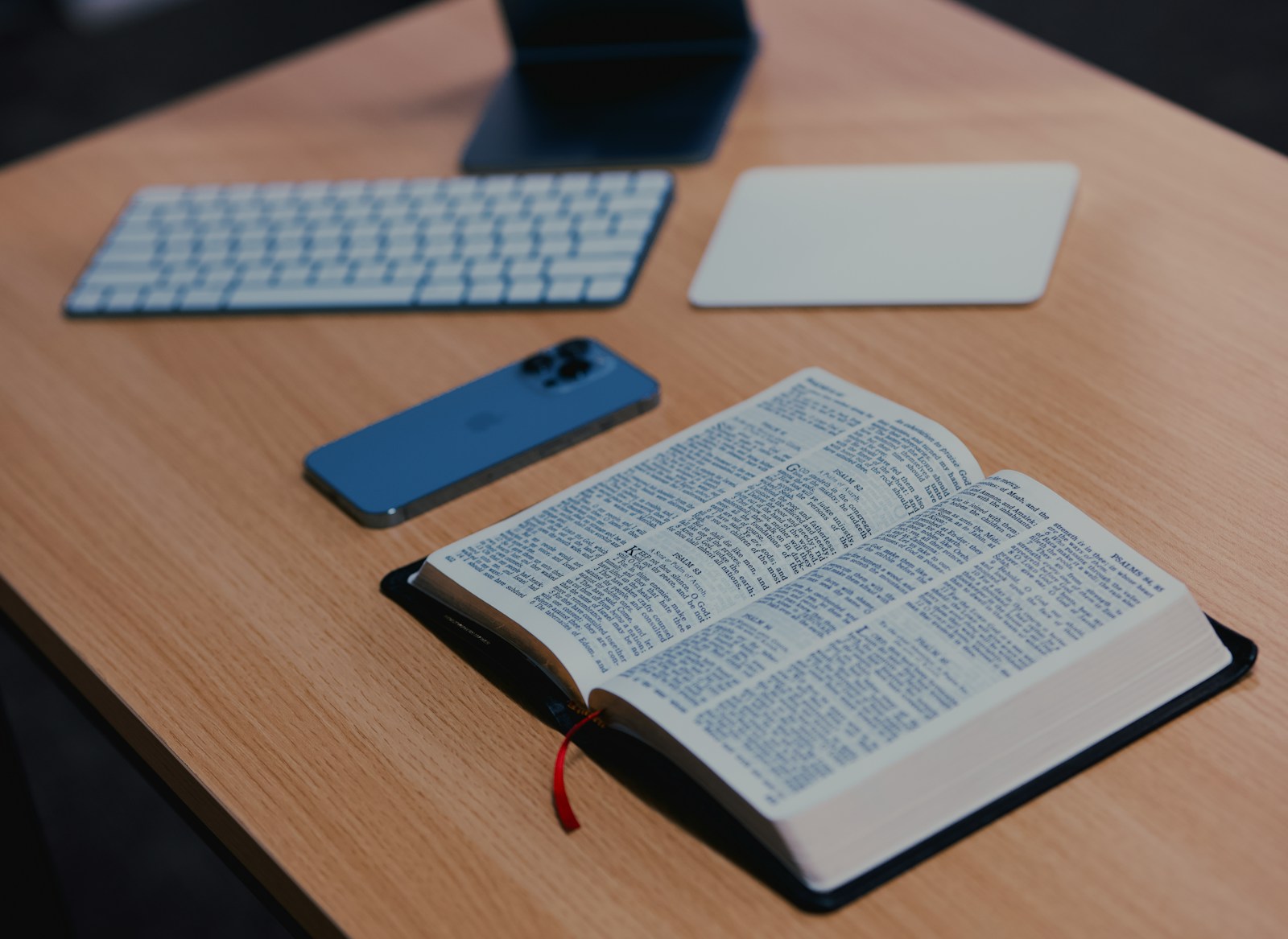
- Gather Essential Materials: In addition to your Bible, you need a pen and paper or a dedicated journal for taking notes. This keeps your thoughts organized and tracks your spiritual journey.
The Foundational Step: Start & End with Prayer
Prayer is not an accessory to Bible study; it is the vital foundation. Without the Holy Spirit’s guidance, Scripture can become confusing.
- Start with Prayer: Ask God to speak to you, open your eyes to see wonderful truths (Psalm 119:18), and help you understand and apply His Word to your life.
- Conclude in Prayer: Conclude your time by asking God to help you apply what you’ve learned. Thank Him for His Word, and take a moment to listen to what He may be putting on your heart.
Phase 2: The Study Process
Once you’ve prepared your space and prayed, you are ready to engage with the text. This process is structured to help you move from simply reading words to transformative application.
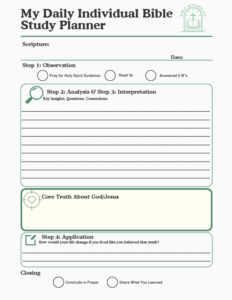
My Daily Individual Bible Study PLanner
Find this entire 4-step process summarized on one page!
Step 1: Observation (What does the text say?)
The goal here is to become a careful reader. Before asking what a passage means, you must first determine what the author wrote.
- Choose a Passage or Topic: Don’t open your Bible randomly. Start with a specific, manageable section, like a short Psalm, a parable, or a chapter from a book like Luke. This helps keep you focused.
- Read Thoughtfully and Repeatedly: Read slowly and read the passage multiple times (at least three!). See how things connect. The first read is for comprehension; the second is for detail; the third is for reflection.
- Answer the 5 W’s: To engage actively, ask the core journalistic questions: Who? What? When? Where? Why? (Why was this written? Why did this event happen?)
Step 2: Analysis (What did the text mean to the original audience?)
This step involves digging deeper into the specific elements of the text you observed. This is where you grab your notebook.
- Take Notes: Write down things that stand out to you, any questions you may have, and any words or phrases you don’t understand. If you have a journaling Bible, simply outline the chapter or write connections in the margins.
- Use Your Imagination: Put yourself in the shoes of the people in the passage. Imagine what it would be like to experience what they experienced. How would you feel? What would you think? This helps bridge the historical gap.
Step 3: Interpretation (What does the text mean for all time?)
Only now, after your personal observation and analysis, is it time to look outside the text for help.
- Use Study Aids (Check Your Work): If you still have questions or need to confirm your analysis, use Bible study resources. Things like a Study Bible or a Commentary will help you understand the historical and cultural context.
- Discover the Core Truth: Focus on the single, timeless message of the passage. How does this passage point to God’s character, or the work of Jesus Christ?
Step 4: Application (How should this change my life today?)
The final step is the most crucial. Without application, Bible study is just academic exercise.
- Reflect and Apply: Be intentional about taking time to reflect on what you’ve studied and how its core truth can apply directly to your life this week.
- Be Specific: Don’t just say, “I should be nicer.” Ask: How can I be nicer to the specific person who frustrated me yesterday? Or: What is the one thing I will change tomorrow based on this truth?
Essential Tools for Individual Study
While the four-step process is the most important tool you have, the right physical resources can clarify context, check your interpretation, and make the study more enjoyable.
Remember, you do not need to invest in a massive library to start. You only need to master two things: your Bible and your notebook.
The Study Bible: Your Best Investment
If you can only get one resource beyond your standard Bible, invest in a good Study Bible.
A good Study Bible contains not only the biblical text but also essential aids like:
- Study Notes: Brief commentary and explanations in the margin.
- Maps & Charts: Visual context for geography and timelines.
- Book Introductions: Concise overviews of the author, audience, and main message of each book.
It’s like having a little bit of all the other resources combined into one. For new believers or those new to individual study, it’s the perfect investment.
- Top Recommendations: The ESV Study Bible is highly recommended by many Christians for its scholarly depth. For new believers, the NIV Starting Place Study Bible was designed specifically for those new to individual study.
The Journal or Notebook
This is arguably the most valuable tool after your Bible. A journal gives you a dedicated space to:
- Track Your Journey: Record your notes, questions, and insights.
- Facilitate Application: Dedicate a space to write down specifically how you will apply the truth you learned (Step 4).
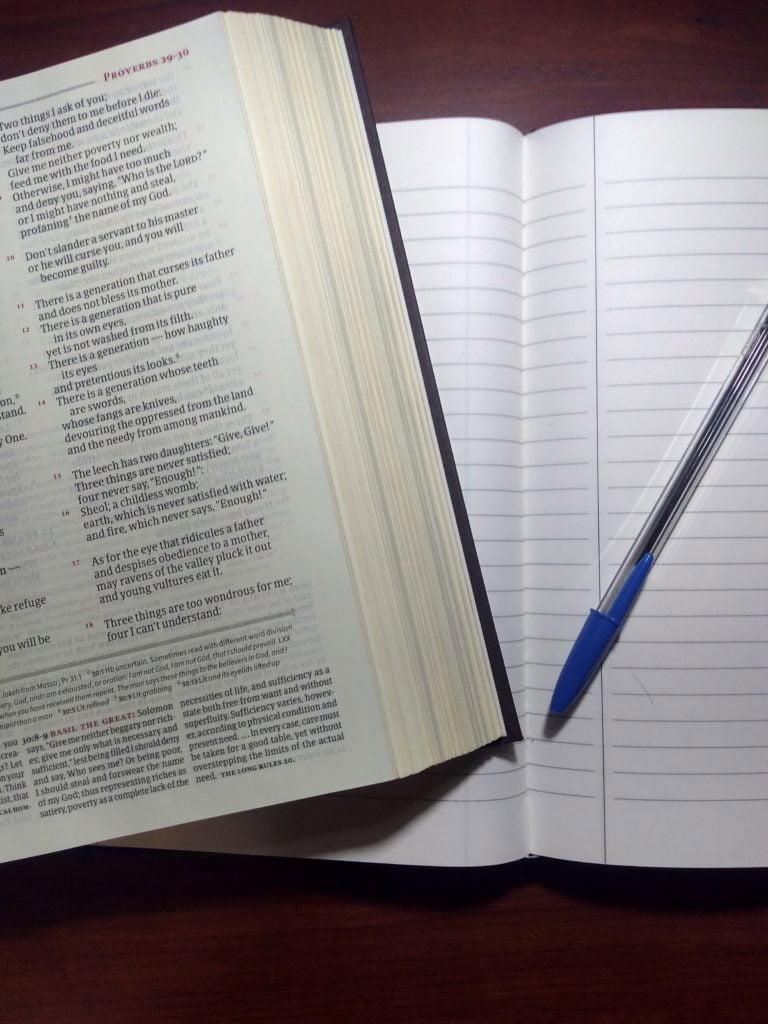
Some people, including myself, use a journaling Bible with lines on the side of the Scripture passages. This is a great way to take notes, outline the chapter, or write down connections as you read.
Expanding Your Toolkit
There are many other tools you can get, such as commentaries, dictionaries, and concordances, that will help you go deeper in your study.
However, if you are just starting out studying the Bible as an individual, we do not recommend getting much more than a good Study Bible.
Ready to Build Your Library? If you want to know what tools those are and get expert recommendations on books, websites, and apps, be sure to check out our master guide: The Wonderlife Toolkit.
Choosing Your Study Method
The four-step process (Reading, Analysis, Interpretation, Application) is the foundation of individual Bible study. However, choosing a structured method can make your time more productive and consistent.
One of the most important decisions you will make after mastering the basics is choosing a method that works best for your personality and time commitment.
Here are three popular methods tailored for individual study:
| Method | Number of Steps | Est. Time Requirement | Style/Focus | Ideal For |
|---|---|---|---|---|
| SOAP Bible Study | 4 | 30 min. — 1 hr. | Balanced, Practical Application | Beginners, busy Christians, or daily devotionals. |
| Inductive Bible Study | 6 | 1.5+ hrs. (Can be broken up) | Academic, Detailed Analysis | Serious study, or when seeking deep context. |
| Lectio Divina | 4.5 | 20+ min. (Or as long as needed) | Meditative, Prayerful Encounter | Contemplative learners seeking intimacy with God. |
If you are struggling to choose a method or feel easily overwhelmed by the depth of the Bible, your own personal Journaling Method (simple notes and outlining) is a great place to start!
Your Next Step
If you want to learn the specific steps, resources, and time commitment required for each method, check out our master guide: The Ulitmate Guide to Bible Study Methods: Find Your Perfect Style.
Overcoming Common Hurdles
Bible study is a lifelong journey, not a task to be completed. As you build this habit, you will face common challenges. It is vital to prepare for them with grace and patience.
Mindset & Momentum
Stay Consistent, Not Perfect: Consistency is key. It can take anywhere from 18 to 254 days to form a habit. Aim to do a little bit every day, even if it’s just reading five verses. Progress over perfection is the goal.
Be Patient: Bible study is a lifelong journey. There is always more to learn and more ways to grow like Christ. God is at work in your life, whether you always see it or not.
What If I Still Feel Confused?
The biggest hurdle for solo study is often the fear of getting it wrong or the struggle to understand complex passages.
| Challenge | Solution |
|---|---|
| I don’t know where to start. | Start with an easy, narrative book that interests you, like the Gospel of Luke or the book of James. |
| I struggle with applying the truth. | Ask: How would my life change if I truly believed this truth? |
| I feel isolated or unsure of my findings. | Consider sharing what you’ve learned with a trusted friend, mentor, or small group. This provides accountability and allows you to test your interpretation against others. |
| I’m not ready for individual study. | That’s okay! Consider joining a group study first. Check out this post on what you can expect when attending a group study. |
Your Next Steps: Conclusion & Commitment
You now have a clear, actionable guide for studying the Bible alone. You have the preparation, the four-step process, and the strategies to overcome the inevitable hurdles.
The challenge now is not knowing how to study, but doing it consistently.
Step 1: Master Your Routine
The best study method won’t help if you can’t be consistent. Before you start, secure the specific tools you need to make your study time a lasting habit.
Download the FREE Build a Bible Study Routine Guide!
This guide is a step-by-step plan to help you:
- Build a lasting, flexible routine that fits your life.
- Choose the right method for your lifestyle.
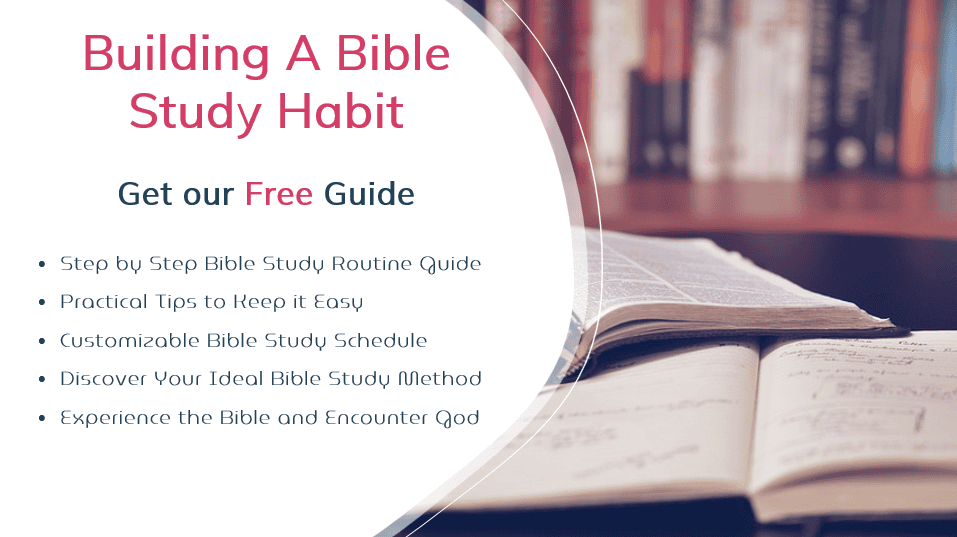
Building a Bible Study Routine Guide
Want to build a Bible study habit? Sign up for our monthly newsletter and we will send you our free Building a Bible Study Routine Guide. You’ll discover your ideal Bible study method and create a customized schedule. Plus, much more.
Here is what you can expect as a Bible Wonderlife subscriber:
-Welcome email with your Free Guide right now!
-Monthly emails with a brief devotional.
-Practical tips and helpful information for growing in your faith.

Building a Bible Study Routine Guide
Want to build a Bible study habit? Sign up for our monthly newsletter and we will send you our free Building a Bible Study Routine Guide. You’ll discover your ideal Bible study method and create a customized schedule. Plus, much more.
Here is what you can expect as a Bible Wonderlife subscriber:
-Welcome email with your Free Guide right now!
-Monthly emails with a brief devotional.
-Practical tips and helpful information for growing in your faith.
Step 2: Choose Your Method
If you found the four-step process helpful, it’s time to choose a defined method (SOAP, Inductive, or Lectio Divina) to give your study structure and focus.
Ready to choose the perfect method for your unique personality and time commitment?
A Final Word of Encouragement
Remember the beautiful core of individual Bible study: It is time spent alone with God. You have everything you need now—the practical steps, the resources, and the mindset. Go and encounter Him today!