

The inductive Bible study method requires making lots and lots of observations of a passage. This can get overwhelming. As such, coming up with or using marking symbols will make the observation process easier and less overwhelming.
The most widely used inductive Bible study marking symbols are from Precept Ministries International or Kari Dent, who started a Precept Bible Study group in Camden, GA. These symbols utilize different colored pencils and highlighters to mark key words in the Bible.
There are hundreds of key words, all with a unique symbol in Bible study. It doesn’t matter what symbol or color is used at all. Who knows, maybe looking at these Inductive marking symbols will help you create your own.
Not sure what the inductive Bible study method is all about? Then check out this great article that will walk you through the Inductive Bible Study Method with an example one step at a time.
Disclaimer: This post may contain affiliate links that at no additional cost to you, I may earn a small commission. Read full privacy policy here.
It’s Okay To Mark in the Bible
First, let’s take a moment to clear something up. It is okay to mark in your Bible. Some will argue that it is not acceptable and may even be a sin. But so long as you are seeking to grow in the wisdom of God’s Word, it is acceptable to mark in your Bible.
Those who say it is not, and argue that it is a sin base that argument on Revelation 22:18 which says, “I warn everyone who hears the words of the prophecy of this scroll: If anyone adds anything to them, God will add to that person the plagues described in this scroll.”
But this argument is invalid. The concern about adding to Scripture is commendable. But to argue that marking up and making notes in the Bible is adding to Scripture is ludicrous. First, it takes this verse out of context. Second, it undermines the very thing it is trying to protect, i.e. the holiness of God’s Word.
This passage of Scripture involves people hearing the Word of God. In the first century, everyone did not have a copy (or access to a copy) of God’s Word. Thus, when John warns of adding to the words of the prophecy, he is referring to adding to its teachings, not making helpful notes to better understand it.
When you mark in your Bible you leave evidence of its transformative power in your life. Every mark, every note is an act of worship that sings praises to God.
Also, by arguing that marking up or making notes in a Bible is adding to Scripture, undermines the very thing it is trying to protect–the holiness of God’s Word. How does it do this? By assuming that one would not be able to clearly distinguish between written notes and commentary and God’s Divine Word.
God’s Word is Holy and special and should be valued in the highest regard. But that does not make writing in or marking up a Bible a sin. Rather, it makes marking in your Bible worthwhile. The idea that you can experience, interact with, and understand God’s Holy Word is in itself a miracle.
So, it is entirely okay and even beautiful at times to mark in your Bible. Why? Because you are using it. You are leaving evidence on the pages of its transformative power in your life. Every mark, every note is an act of worship that sings praises to God.
Methods Of Bible Marking
So, what are some ways that people mark in their Bible? Often you will see people use colored pens and highlighters to mark in their Bible. They will underline, circle, highlight, draw, scribble, etc. both on top of the text and in the margins.
People will typically have a set system of marking in their Bible. That is, that different colors or strokes will indicate different things. For example, every promise of God might be highlighted in purple. There is not one set marking system and you will find variations between people.
If you are a fan of this idea, then you may want to check out these common symbols for inductive Bible study. They will help you make your observations easier and fun!
Others may not have a set marking system at all, but rather do what comes naturally in the moment. And while some may use lots of different colored pens and/or highlighters, others will not. Honestly, it’s going to be best to find what works for you through trial and error.
I remember one time I tried marking in my Bible with a whole bunch of different colors and pens. I didn’t like it. I forgot what colors meant what and I ran out of colors to mark different things.
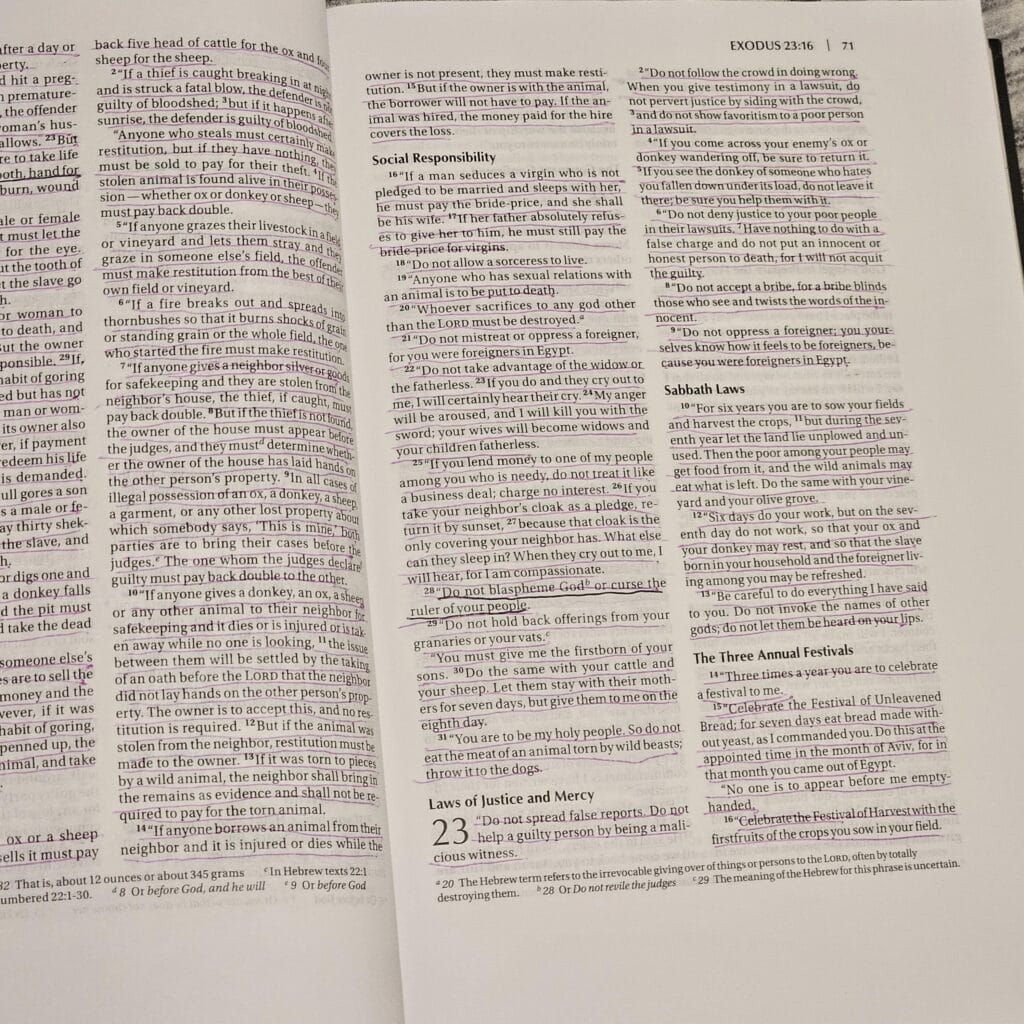
What happened was I was going to underline the different covenants (and references to them) in the Old Testament in different colors. Then when I got to the Mosaic Covenant, I was underling whole pages in Bible. Page after page. And it not only got tedious, but distracting for me.
So, you may want to create a method of marking in your Bible that works best for you. To do that you may want to consider:
- Whether or not you want to use different colors for different things
- Whether or not you want to utilize both highlighters and pens
- What pen strokes or symbols you may want to use
Now, before you make any concrete decisions on creating a Bible marking system for you, you may want to keep reading to know what to mark and how others mark up their Bible for inductive Bible study.
What to Mark in Your Bible
Now that you kind of have an idea of different methods of marking in a Bible for inductive Bible study, it’s time to discover what to mark in your Bible. Some people will choose to mark a whole lot of different things, others may only mark a few things.
Here is a list of some things that you may want to consider marking when creating your Bible marking system:
- Repeated words or themes
- Transition words
- People
- Promises of God
- References/Allusions to Jesus
- Contrasts
- Lists
- Summary or key verses
- doctrinal concepts
- etc.
These are just some of the common things people will mark in their Bible. Others may write notes in the margins or do a bit of both. Some common notes people may take include:
- Outlines of a passage or flow of argument
- Definitions of key words
- Cross-References
- Explanatians
- Thoughts or Prayers
- Questions you may have
Hopefully, this will help give you some idea of what to mark in your Bible. Again, it’s going to depend on personal preference and style.
Want to know what else to look for when studying the Bible? Here is a list of all the questions you need to ask when doing Inductive Bible Study. These questions will tell you not only what to look for but what to do with the insights that you discover.
Bible Marking for Inductive Bible Study
Before we take a look at common Bible marking symbols for Inductive Bible study, let’s discuss what are some of the common ways people mark in their Bible and what they mark.
As a general rule, colored pencils or pens and highlighters are used to mark in Bibles. Though some just use a pencil. Often Bible’s have special pages that are thinner than a regular book. As such, you want to be cautious using regular pens and highlighters.
To remedy this some Bible publishers have begun publishing Bibles with thicker pages that are designed for extensive writing and Bible marking like the NIV, Journal the Word Bible. There are also specific highlighters and pens that were created for marking Bible pages that will not bleed, fade, or smear.
In his book on how to study the Bible, evangelist D.L. Moody recommends people mark:
- Good things you hear
- Underling or go over letters with a pen
- Number repeated words or phrases,
- Mark: Cross-references, words that change meaning, unfortunate divisions, and religious crisis in you life
Are you concerned about marking in your Bible? That’s okay. Check out this great article that explains why marking in your Bible is a beautiful practice and goes over even more things you may want to consider marking.
Common Inductive Marking Symbols
Overall, the most common and widely used inductive Bible marking symbols come from Precept Ministries International, founded by Kay Arthur. Precept Ministries was created to equip people with the tools and resources for Inductive Bible study.
One of the unique features is their marking system. It uses symbols to help users mark key elements and identify important information within a Bible passage. The precept Ministries marking system uses a combination of highlighting, underlining, color, and shapes to create unique symbols, which can include:
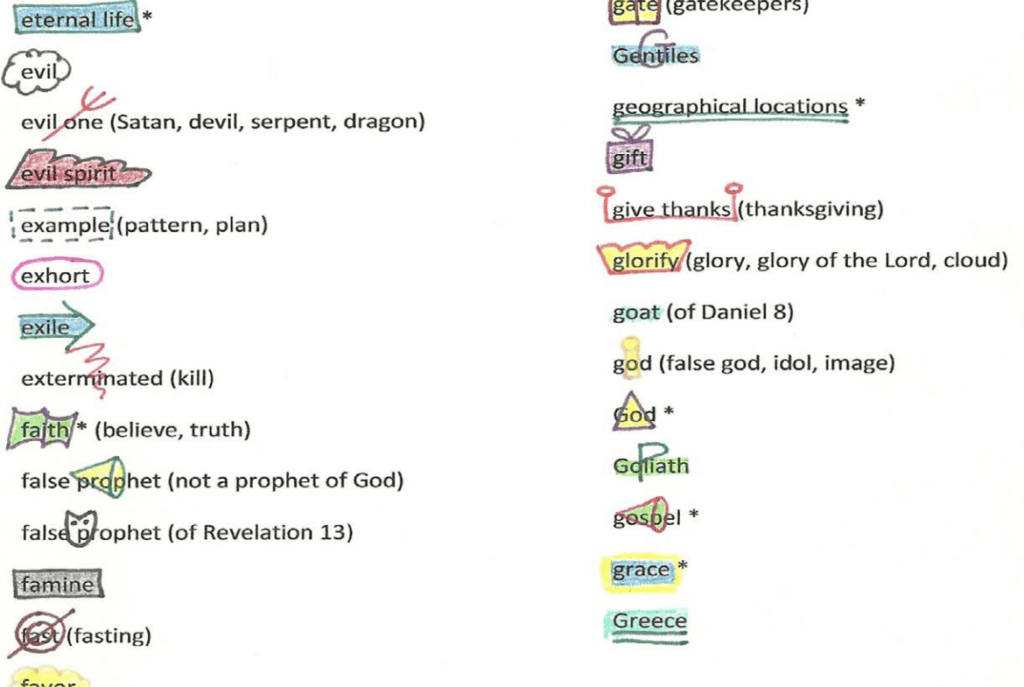
- Circles
- Boxes
- Triangles
- Question Marks
- Exclamation Points
- Clouds
- Capital letters
- Arrows
- Double Underline
- Crosses
- and More
This unique approach can help someone new to Inductive Bible study carefully observe a passage in the Bible. Though, it can also be overwhelming and prove too much. Which tends to be my opinion on the matter.
That said, if you are interested in the idea, Precept Scotland has put together a document that has a complete list of keyword marking symbols. And Kari Dent, who started a Precept Bible Study in her hometown has worked hard on creating key word lists and symbols for each book of the Bible.
Did you know that marking key words is not the only thing to look for when studying the Bible? There are tons of other questions to ask. So, I wrote this article listing every question you need to ask for inductive Bible study.
Creating Your Own Inductive Marking Symbols
Hopefully, these common Bible marking symbols for the inductive Bible study method can help you make the observation process a lot easier. You can use the symbols from Precept Ministries and Keri Dent, or created your own. If you are interested in creating your own, here are some tips I recommend:
- Start with a purpose: Consider what things you want to mark in your Bible. Your symbols should align with your personal Bible study goals and habit. What type of information do you find most important in your study?
- Keep it simple: Keep your symbols simple and easy to draw. Not only will you be using these symbols frequently, but the pages of the Bible have limited space. If I was using a marking system I would create symbols that could be on the outside margins of a passage, to keep the text clear and easy to read in the future.
- Consider the use of colors or a visual hierarchy: Different colors can represent different themes or ideas. You may also want to use larger or bolder symbols for key verses or ideas like main points of a passage.
- Create a legend: Start with a few key symbols for key ideas, people, and concepts throughout the whole Bible. And create a key with these symbols on it that you can refer back to. Leave room for new key words and ideas as you go along in your study.
- Experiment and Refine: It may take some time to come up with a system that works for you. So, don’t be afraid of a little trial and error.
Ideally, these practical tips will help you create your own Bible marking system. When you create your own symbols, it can make your Bible study time more meaningful and personal.
Remember, the goal of Bible study is to grow closer to and become more like Christ. So, only use Bible marking symbols if they aid you in doing that. Keep it simple and have fun enjoying experiencing the Bible in a way that you encounter God.